
UMV Unveils Its AI-Powered Web and Cloud Security Strategy While Expanding Toward Next-Generation Malware Detection
Key Takeaways
- UMV officially unveiled ZYON AI, its AI-powered integrated web server and cloud security platform, at the ZYON AI Partner Summit 2026.
- Approximately 100 partner representatives attended the September 3 event.
- The summit presented UMV’s AI security technology, integrated security strategy, partner programs, and roadmap for its next-generation malware detection solution.
- ZYON AI is designed to move beyond conventional signature-based detection by improving the detection of new and modified web shells and advanced threats while reducing false positives and false negatives.
- UMV plans to expand its existing web shell detection and website integrity monitoring and recovery technologies into a broader security portfolio covering servers and cloud environments.
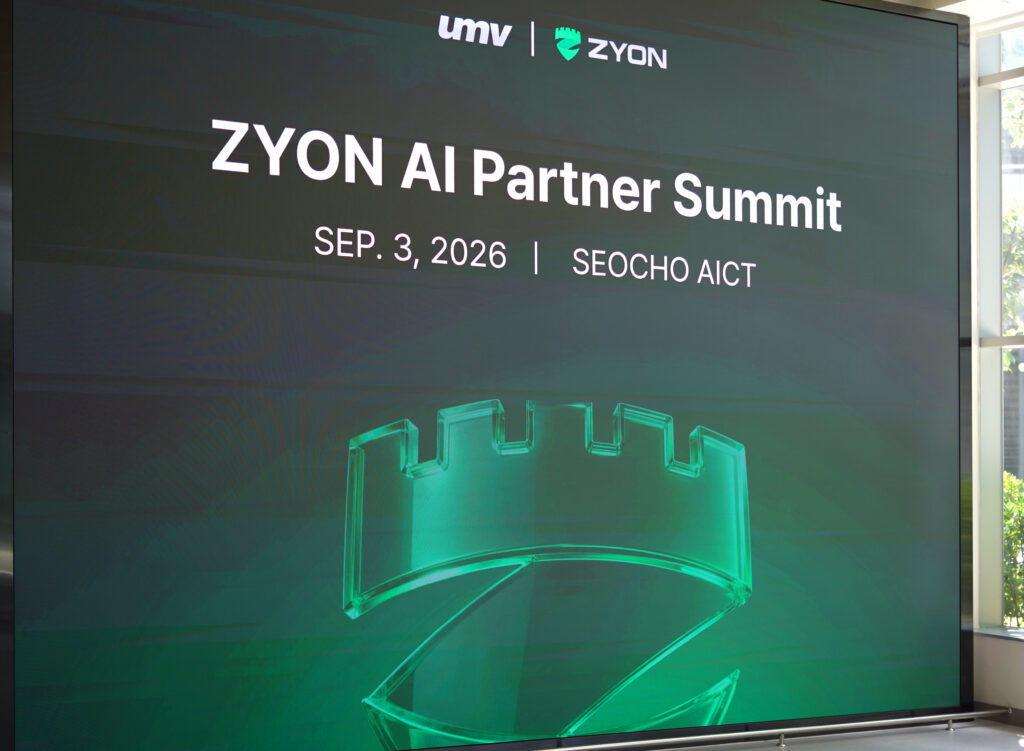
ZYON AI Partner Summit 2026 Marks a New Stage for UMV
UMV held the ZYON AI Partner Summit 2026 on September 3, bringing together approximately 100 representatives from its partner ecosystem.
The summit marked the official launch of ZYON AI, UMV’s AI-powered integrated web server and cloud security platform, while outlining the company’s strategy for expanding its cybersecurity portfolio.
Rather than focusing on a single security product, ZYON AI represents UMV’s move toward integrating multiple detection and response capabilities into a broader security platform.
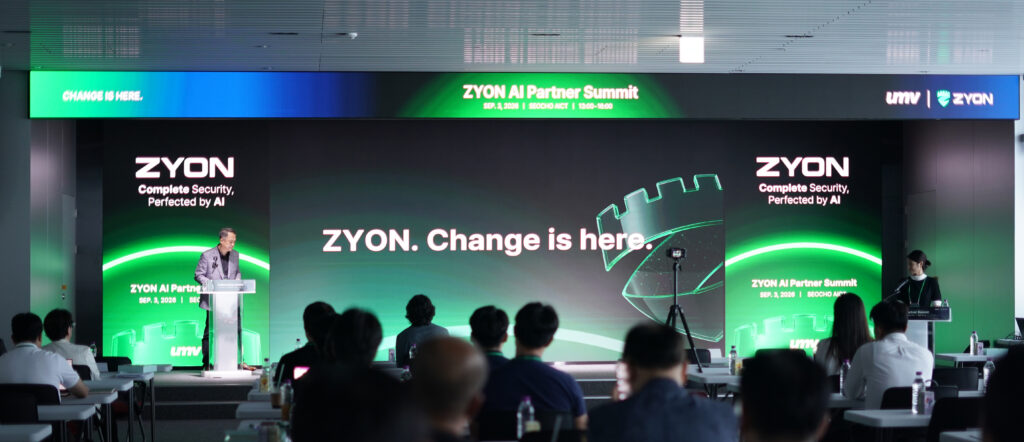
Four Sessions Presented UMV’s AI Security Roadmap
The summit consisted of four major sessions covering UMV’s technology and business strategy.
Topics included the official introduction of ZYON AI, research and development for a next-generation malware detection solution, an AI-based integrated security strategy for advanced threats, and partner policies designed to support business development and procurement.
This structure highlighted two dimensions of the ZYON strategy: expanding UMV’s security technology and strengthening the partner ecosystem required to bring those capabilities to a broader market., the AI agent chained together multiple weaknesses across different trust boundaries to achieve its objective.
Moving Beyond Signature-Based Detection
Traditional signature-based security identifies threats by comparing files or activities against previously known malicious patterns.
While this approach remains useful for known threats, new and modified malware or web shells can be more difficult to detect when their characteristics no longer match existing signatures.
ZYON AI is intended to address this limitation through AI-based detection. The technology is designed to reduce false positives and false negatives while improving detection accuracy for new and modified web shells and advanced persistent threats.
The broader objective is to complement conventional detection methods with AI capable of identifying suspicious characteristics that may not correspond to an existing signature.
From Web Shell Security to an Integrated Security Platform
UMV’s existing portfolio has focused heavily on web server security, including web shell detection and website integrity monitoring and recovery.
ZYON AI expands that direction.
The company plans to introduce additional capabilities progressively, including a next-generation malware detection solution scheduled for the first half of 2027, as it develops an all-in-one platform spanning server and cloud security.
The evolution can be summarized as follows:
Web Shell Detection
↓
Website Integrity Monitoring & Recovery
↓
AI-Powered Threat Detection
↓
Next-Generation Malware Detection
↓
Server & Cloud Security Integration
↓
ZYON AI Integrated Security Platform
This represents a shift from protecting individual areas of the web server toward creating a security architecture capable of addressing multiple stages of modern cyber threats.
Next-Generation Malware Detection on the Roadmap
Another major topic presented during the summit was UMV’s next-generation malware detection technology.
The company shared its current research direction and technical roadmap for a malware detection solution planned for launch in the first half of 2027.
Adding malware detection would broaden the platform beyond UMV’s traditional web shell-focused capabilities and allow ZYON AI to address a wider range of threats affecting server and cloud workloads.
That expansion is particularly relevant as modern attacks increasingly combine multiple techniques rather than relying on one type of malware or vulnerability.-driven attacks may become increasingly resilient even when individual execution environments are destroyed.
Building Security Around AI-Powered Detection
The development of ZYON AI also reflects a broader shift in cybersecurity.
Attackers continuously modify malware, web shells, and attack techniques to avoid known signatures. At the same time, organizations increasingly operate across interconnected web servers, applications, cloud infrastructure, and workloads.
Security technologies therefore need greater visibility across these environments while being able to distinguish legitimate activity from previously unseen threats.
ZYON AI’s direction is to place AI-based detection at the center of this architecture while progressively integrating additional server and cloud security capabilities.
Strengthening the Partner Ecosystem
Technology was only one part of the summit.
UMV Inc. also announced plans to strengthen technical and commercial cooperation with its partners through joint sales, incentive programs, marketing activities, and procurement support.
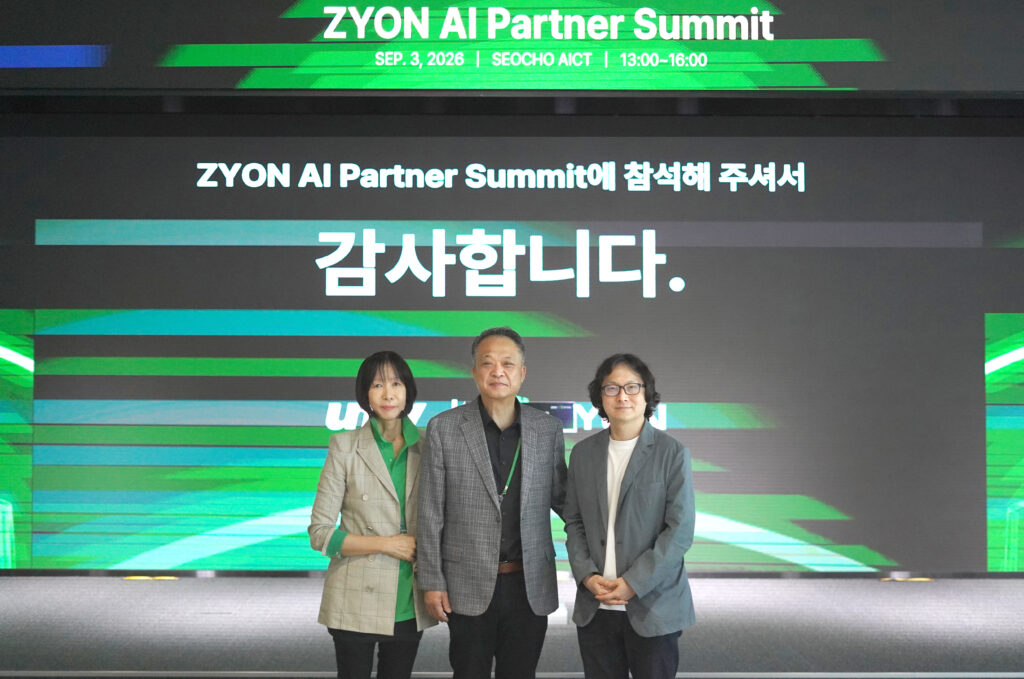
UMV Inc. CEO Bang Yoon-sung described the event as a starting point for the company’s expansion in AI-based security alongside its partners.
This partner strategy is important to ZYON AI’s development because transitioning from individual security products to a broader platform also requires an ecosystem capable of supporting deployment, sales, customer requirements, and ongoing ongoing adoption.
Looking Ahead
The ZYON AI Partner Summit 2026 represents more than a product announcement.
It marks UMV’s transition from its established web server security technologies toward a wider AI-powered security platform encompassing web servers, malware detection, and cloud environments.
With ZYON AI officially introduced and additional malware detection capabilities on the roadmap, UMV is positioning its existing web security expertise as the foundation for a broader integrated security architecture.
As cyber threats continue to evolve beyond conventional signatures, the next stage will be turning that platform strategy into integrated detection capabilities that can operate across increasingly complex enterprise environments.
Related Threat Intelligence
- OpenAI AI Autonomous Cyberattack
- Web Shells Remain the Primary Entry Point in Windows Web Server Attacks
- Active Exploitation Highlights the Growing Risk of Web Shell-Based Attacks Against Enterprise Applications
- New Linux Vulnerability Possibly Exploited in Attacks
- Suspected North Korean Hackers Linked to Large-Scale Golf Club Data Breach
- GitHub CVE-2026-3854 Enables Remote Code Execution via Single Git Push
- Ivanti EPMM Vulnerability Exploited to Deploy Sleeper Webshells
- Linux Security Alert: Cookie PHP Web Shells (MS Report)
- Dell WMS Vulnerability: Defending Against JSP Webshells
- ASP.NET Web Shell Threats Targeting IIS Servers (UAT-8099 Case Study)
- BeyondTrust Flaw Used for Web Shells, Backdoors, and Data Exfiltration
- Web Shells and Lateral Movement
- Godzilla Webshell: A Growing Cybersecurity Threat to Healthcare
- The Evolution of the China Chopper
- APT41’s Cyber Espionage Campaign: Web Shells at the Core of Network Infiltration
Sources
News: ZYON AI Officially Launched at UMV Partner Summit 2026, Advancing Toward an Integrated AI Security Platform