
ASEC’s Q2 2026 Analysis Shows Web Shells Continue to Drive Ransomware, Lateral Movement, and Server Compromise
Key Takeaways
- ASEC analyzed malware attacks targeting Windows IIS and Apache Tomcat web servers during Q2 2026.
- Most attacks began with the deployment of a web shell.
- Attackers leveraged web shells for privilege escalation, lateral movement, remote control, and ransomware deployment.
- ASEC observed the use of tools such as AnyDesk, BadIIS, GotoHTTP, LCX, and npc.exe following initial compromise.
- LockBit 3.0 ransomware activity was linked to one of the investigated attack chains.
- The findings reinforce the need for continuous web shell detection alongside vulnerability management.
Web Shells Continue to Serve as the Initial Foothold
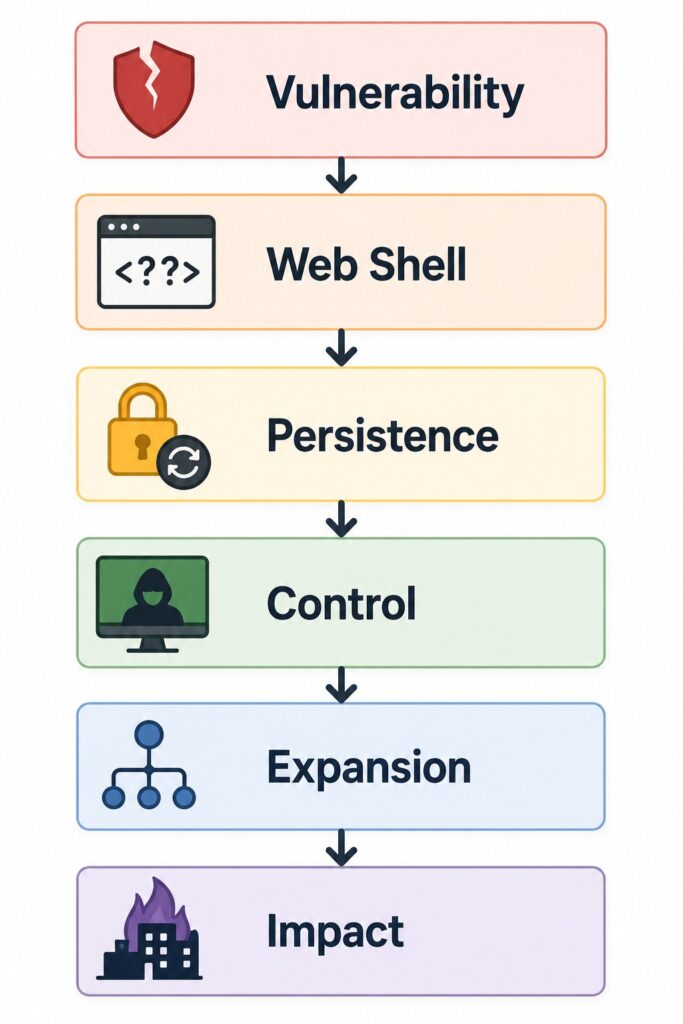
According to AhnLab Security Emergency Response Center (ASEC), attacks targeting Windows-based web servers during the second quarter of 2026 consistently followed a familiar pattern: attackers first established access through a web shell, then expanded their control across the compromised environment.
The report analyzed attacks against Microsoft IIS and Apache Tomcat servers operating on Windows and found that web shells remained the primary method used to gain persistence after exploiting vulnerable applications or servers.
Rather than serving as the final objective, web shells acted as the foundation for broader post-compromise activity.
From Web Shell to Full System Compromise
Once a web shell was deployed, attackers quickly progressed through multiple attack stages.
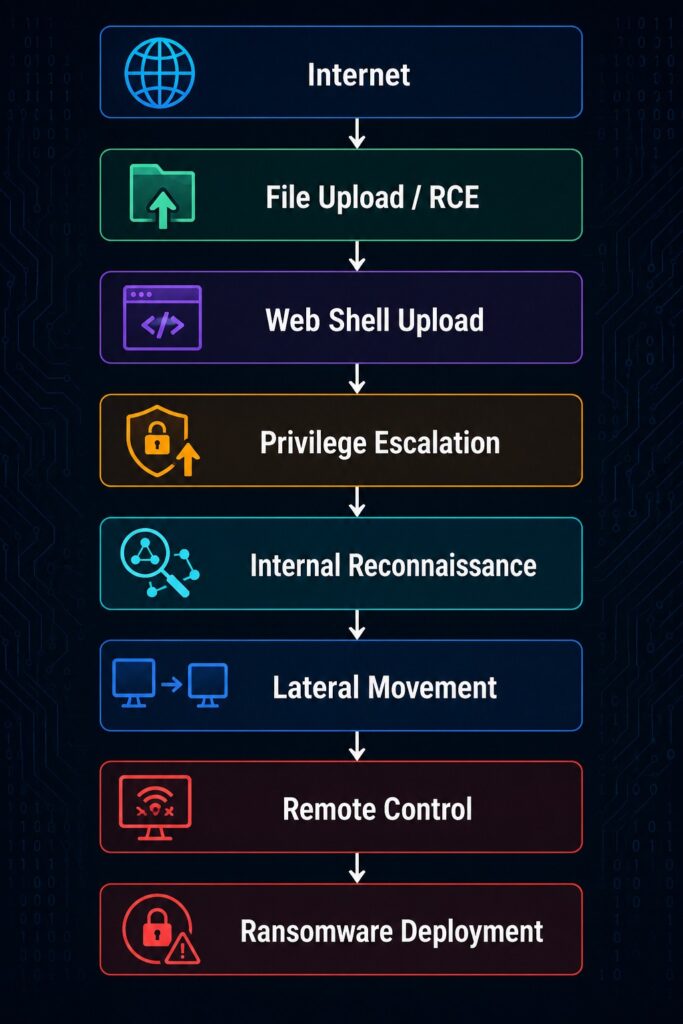
ASEC observed the following sequence in many incidents:
- Web shell upload
- Privilege escalation
- Internal reconnaissance
- Lateral movement
- Remote administration
- Cryptocurrency mining
- VPN installation
- Ransomware deployment
One real-world case involved a threat actor believed to be UAT-8099, who reportedly deployed LockBit 3.0 ransomware after establishing persistence through a web shell.
The attackers also used various administration and proxy tools—including AnyDesk, GotoHTTP, LCX, BadIIS, and npc.exe—to expand control over compromised systems.
Attack Flow Overview
Why Web Shell Detection Matters
The report highlights an important trend: malware itself is often not the initial threat.
Instead, attackers first establish persistent access through a web shell before introducing additional malicious tools.
Once persistence is achieved, attackers can:
- Execute arbitrary commands
- Deploy ransomware
- Install remote administration tools
- Move laterally across the network
- Exfiltrate sensitive information
- Maintain long-term access
Because web shells frequently remain hidden within legitimate web applications, organizations need continuous monitoring rather than relying solely on endpoint protection.
Strengthening Web Server Security
ASEC recommends several measures to reduce exposure, including:
- Promptly applying security patches
- Eliminating file upload vulnerabilities
- Restricting unnecessary services
- Strengthening firewall policies
- Updating antivirus software
- Monitoring suspicious web server activity
However, preventative controls alone cannot guarantee protection if attackers successfully upload a web shell.
Organizations should also implement continuous monitoring capable of identifying malicious web shell behavior after initial compromise.
WSS AI Insight: Detecting the Threat Before It Spreads
ASEC’s findings reinforce a critical reality of modern cyberattacks: the web shell is often the first step and not the final attack.
Once installed, a web shell enables attackers to launch ransomware, deploy malware, steal data, and move laterally across enterprise environments.
AI-powered web shell detection solutions such as WSS AI provide an additional layer of defense by continuously analyzing web server behavior and identifying both known and previously unseen web shell variants in real time.
By detecting the initial foothold before attackers escalate privileges or deploy ransomware, organizations can significantly reduce the impact of sophisticated web server attacks.
Conclusion
The ASEC Q2 2026 report demonstrates that web shells remain one of the most effective tools used by attackers targeting Windows web servers.
As ransomware operators and advanced threat groups increasingly rely on web shells to establish persistence, organizations must combine vulnerability management with continuous web shell monitoring to protect critical web infrastructure.
Real-time detection and rapid response remain essential components of modern web server security.
Related Threat Intelligence
- Active Exploitation Highlights the Growing Risk of Web Shell-Based Attacks Against Enterprise Applications
- New Linux Vulnerability Possibly Exploited in Attacks
- Suspected North Korean Hackers Linked to Large-Scale Golf Club Data Breach
- GitHub CVE-2026-3854 Enables Remote Code Execution via Single Git Push
- Ivanti EPMM Vulnerability Exploited to Deploy Sleeper Webshells
- Linux Security Alert: Cookie PHP Web Shells (MS Report)
- Dell WMS Vulnerability: Defending Against JSP Webshells
- ASP.NET Web Shell Threats Targeting IIS Servers (UAT-8099 Case Study)
- BeyondTrust Flaw Used for Web Shells, Backdoors, and Data Exfiltration
- Web Shells and Lateral Movement
- Godzilla Webshell: A Growing Cybersecurity Threat to Healthcare
- The Evolution of the China Chopper
- APT41’s Cyber Espionage Campaign: Web Shells at the Core of Network Infiltration
Sources
News: Q2 2026 Statistical Report on Malware Targeting Windows Web Servers