
Active Exploitation Highlights the Growing Risk of Web Shell-Based Attacks Against Enterprise Applications
Key Takeaways
- CISA has added CVE-2026-12569 to its Known Exploited Vulnerabilities (KEV) catalog
- The vulnerability affects PTC Windchill PDMlink and PTC FlexPLM enterprise software
- Attackers are actively exploiting the flaw to deploy JSP web shells
- The vulnerability enables remote code execution (RCE) through unsafe deserialization
- Organizations should patch immediately and inspect systems for indicators of compromise (IoCs)
- Real-time web shell detection is becoming increasingly critical for enterprise web security
Active Exploitation Drives CISA KEV Listing
The U.S. Cybersecurity and Infrastructure Security Agency (CISA) has added CVE-2026-12569 to its Known Exploited Vulnerabilities (KEV) catalog after confirming active exploitation in the wild.
The critical vulnerability affects PTC Windchill PDMlink and PTC FlexPLM, enterprise Product Data Management (PDM) and Product Lifecycle Management (PLM) platforms widely used across manufacturing and engineering organizations.
With a CVSS score of 9.3, the flaw allows remote code execution through improper input validation and unsafe deserialization, giving attackers an opportunity to execute arbitrary code on vulnerable systems.
Attackers Deploy JSP Web Shells for Persistent Access
Following disclosure of the vulnerability, PTC reported continued malicious activity targeting unpatched systems.
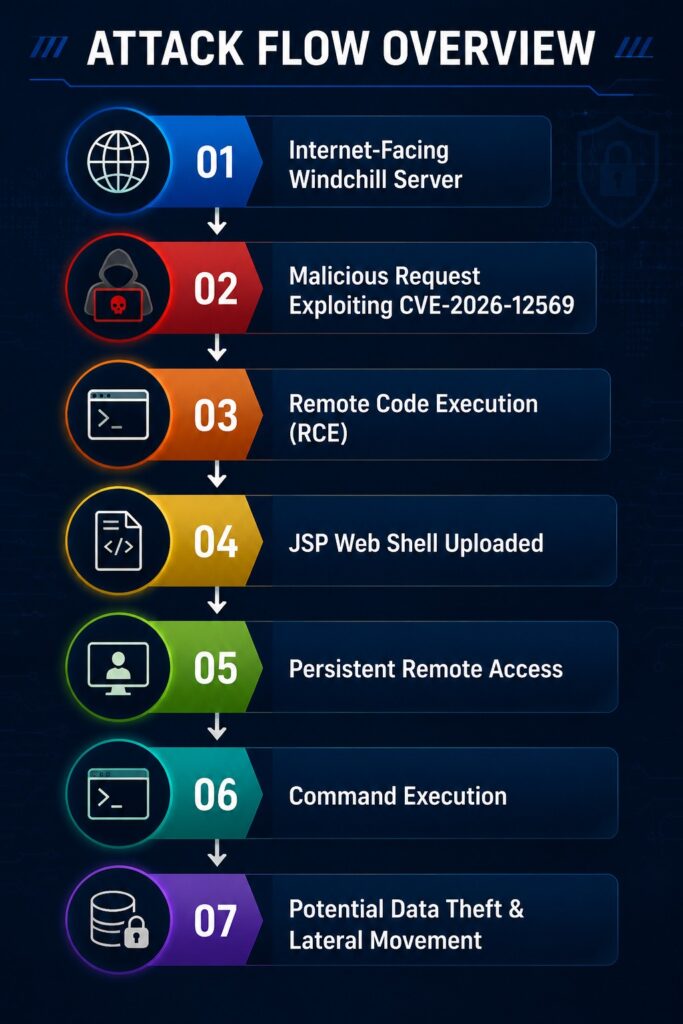
Threat actors have been observed exploiting CVE-2026-12569 to deploy JSP web shells, enabling persistent remote access after successful exploitation.
According to PTC, attackers create web shell files following the naming pattern:
/Windchill/login/[0-9a-f]{16}.jsp
Once installed, these web shells allow attackers to execute commands remotely, establish persistence, and potentially launch additional attacks against enterprise infrastructure.
Why JSP Web Shells Remain a Serious Enterprise Threat
Unlike traditional malware, web shells often blend into legitimate web applications and remain active for extended periods.
Attackers frequently use them to:
- Maintain long-term persistence
- Execute remote commands
- Upload additional malware
- Steal sensitive data
- Move laterally across enterprise networks
- Evade traditional signature-based detection
Because JSP web shells operate directly within web server environments, rapid detection is essential to minimizing attacker dwell time.
CISA and PTC Mitigation Recommendations
Organizations using affected Windchill environments should immediately:
- Apply the latest security patches
- Block known malicious IP addresses
- Search for suspicious JSP files
- Review HTTP access logs
- Verify indicators of compromise (IoCs)
- Restrict unnecessary internet exposure
- Deploy WAF and IDS rules to detect malicious requests
These steps help reduce the likelihood of successful exploitation while supporting incident response efforts.
Attack Flow Overview
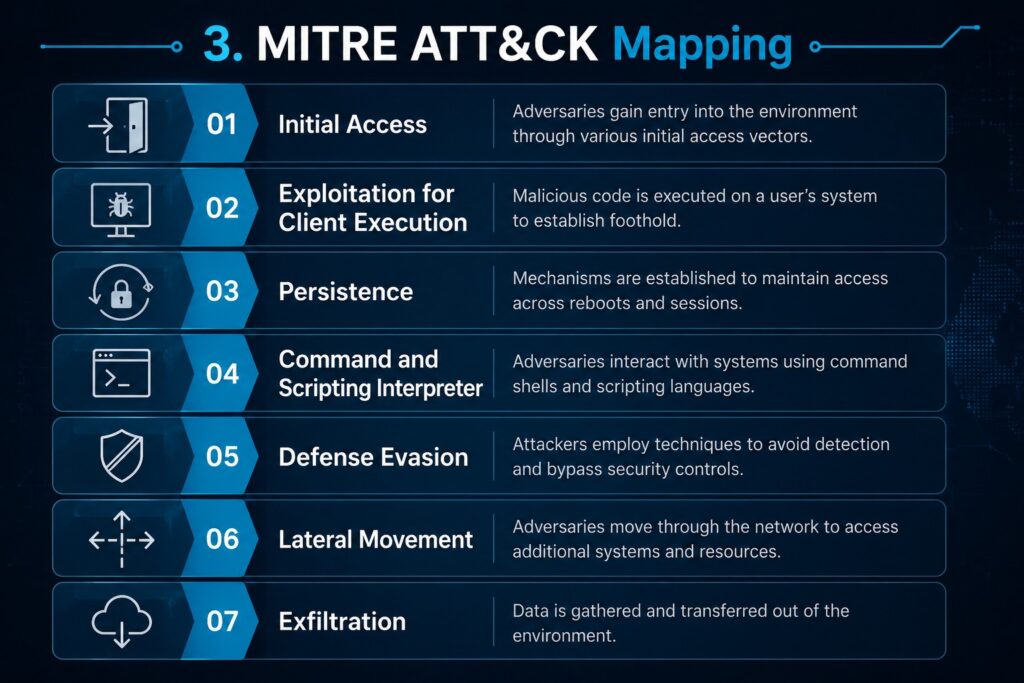
MITRE ATT&CK Mapping
WSS AI Insight: Detecting Web Shells Beyond Known Signatures
The continued use of JSP web shells demonstrates that attackers increasingly rely on persistent web-based access rather than short-lived exploits alone.
While patching vulnerabilities remains essential, organizations also require solutions capable of detecting web shells that may already exist inside compromised environments.
AI-powered web shell detection technologies such as WSS AI provide an additional security layer by continuously monitoring web server behavior and identifying suspicious web shell activity—including previously unknown or modified variants that may bypass traditional signature-based defenses.
Conclusion
The addition of CVE-2026-12569 to CISA’s KEV catalog underscores how quickly threat actors weaponize newly disclosed vulnerabilities.
As attackers continue deploying JSP web shells following successful exploitation, organizations should combine timely patch management with continuous web server monitoring and real-time threat detection.
Protecting enterprise web applications increasingly requires both proactive vulnerability management and advanced web shell detection capabilities.
Related Threat Intelligence
- New ‘Dirty Frag’ Linux Vulnerability Possibly Exploited in Attacks
- Suspected North Korean Hackers Linked to Large-Scale Golf Club Data Breach
- GitHub CVE-2026-3854 Enables Remote Code Execution via Single Git Push
- Ivanti EPMM Vulnerability Exploited to Deploy Sleeper Webshells
- Linux Security Alert: Cookie PHP Web Shells (MS Report)
- Dell WMS Vulnerability: Defending Against JSP Webshells
- ASP.NET Web Shell Threats Targeting IIS Servers (UAT-8099 Case Study)
- BeyondTrust Flaw Used for Web Shells, Backdoors, and Data Exfiltration
- Web Shells and Lateral Movement
- Godzilla Webshell: A Growing Cybersecurity Threat to Healthcare
- The Evolution of the China Chopper
- APT41’s Cyber Espionage Campaign: Web Shells at the Core of Network Infiltration
Sources
News: CISA Adds Exploited PTC Windchill RCE Flaw to KEV as Web Shell Attacks Continue