
More Than 100,000 Customer Records Exposed Following Website Compromise
Key Takeaways
- More than 100,000 customer records were reportedly exposed
- Malware was allegedly inserted into the golf club website
- Authorities are investigating possible North Korean hacker involvement
- Personal information including IDs and passwords may have been leaked
- Stolen data could be used for secondary cyberattacks
- Real-time web threat monitoring is becoming increasingly critical
Large-Scale Personal Data Breach Reported at Korean Golf Club
A large-scale cyberattack targeting the website of Lee & Lee Country Club (Lee & Lee CC) has reportedly resulted in the exposure of more than 100,000 customer records.
According to Korean media reports, authorities are investigating possible links to North Korean threat actors following the discovery of malicious code embedded within the organization’s website infrastructure.
The incident highlights the growing risks facing customer-facing web services that store large volumes of sensitive personal information.
Malware-Infected Website Suspected in Initial Compromise
Investigators believe attackers inserted malware into the golf club website as early as October 2025, potentially allowing long-term unauthorized access to internal systems and customer databases.
The leaked information reportedly includes:
- Names
- Dates of birth
- Phone numbers
- Email addresses
- IDs and passwords
- Physical addresses
The scale of exposed data significantly increases the risk of identity theft, credential abuse, phishing attacks, and follow-on intrusions.
Possible North Korean Threat Actor Involvement Under Investigation
Authorities are reportedly examining possible links to North Korean hacking organizations, including groups associated with the Reconnaissance General Bureau.
The incident reflects a broader trend in which sophisticated threat actors target relatively underprotected public-facing web services to establish persistence and exfiltrate valuable data over extended periods of time.
As attackers increasingly focus on long-term access and stealthy compromise, organizations with limited monitoring capabilities remain attractive targets.
Personal Data Exposure and Secondary Attack Risks
Large-scale personal data leaks can lead to a wide range of secondary attack scenarios.
Threat actors may leverage stolen credentials and personal information for:
- Credential stuffing attacks
- Phishing and smishing campaigns
- Social engineering attacks
- Account takeover attempts
- Additional targeted intrusions
Industries that manage large customer databases, including hospitality, membership services, and retail platforms, continue to face increasing cyber risks due to the high value of stored personal information.
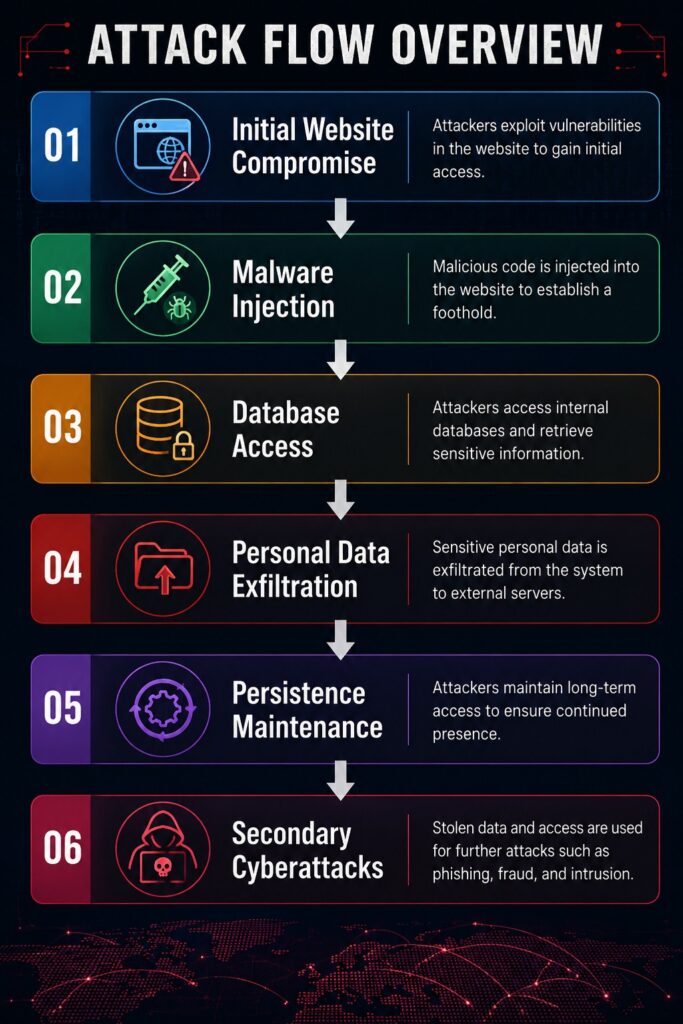
Attack Flow Overview
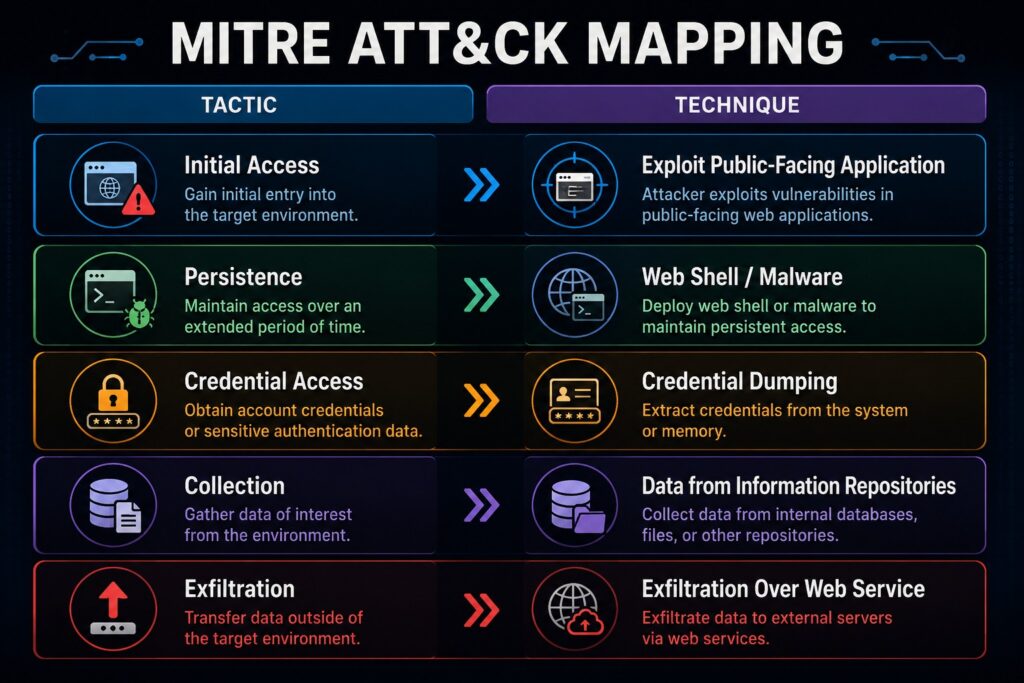
MITRE ATT&CK Mapping
WSS Detection Points
- Suspicious web shell activity
- Abnormal database access attempts
- Unauthorized file modification
- Data exfiltration behavior
- Persistence-related web activity
Growing Importance of Web Threat Monitoring and Detection
This incident demonstrates how malware-based intrusions targeting web services can remain undetected for extended periods while attackers maintain persistence within compromised environments.
Organizations operating public-facing services should strengthen:
- Real-time threat monitoring
- Webshell detection
- Database access control
- Log analysis and anomaly detection
- Incident response procedures
Solutions such as WSS can support detection of abnormal web activity, malicious persistence behavior, and web-based attack attempts.
Increasing Risks Facing Public-Facing Web Services
The Lee & Lee CC breach highlights how organizations storing large volumes of customer information are becoming increasingly attractive targets for sophisticated cyber threat actors.
As web-based intrusions and persistence-oriented attacks continue to evolve, organizations must adopt proactive monitoring and detection strategies to minimize the risk of large-scale personal data exposure.
Related Threat Intelligence
- GitHub CVE-2026-3854 Enables Remote Code Execution via Single Git Push
- Ivanti EPMM Vulnerability Exploited to Deploy Sleeper Webshells
- Linux Security Alert: Cookie PHP Web Shells (MS Report)
- Dell WMS Vulnerability: Defending Against JSP Webshells
- ASP.NET Web Shell Threats Targeting IIS Servers (UAT-8099 Case Study)
- BeyondTrust Flaw Used for Web Shells, Backdoors, and Data Exfiltration
- Web Shells and Lateral Movement
- Godzilla Webshell: A Growing Cybersecurity Threat to Healthcare
- The Evolution of the China Chopper
- APT41’s Cyber Espionage Campaign: Web Shells at the Core of Network Infiltration
Sources
News: Suspected North Korean Hackers Linked to Large-Scale Golf Club Data Breach